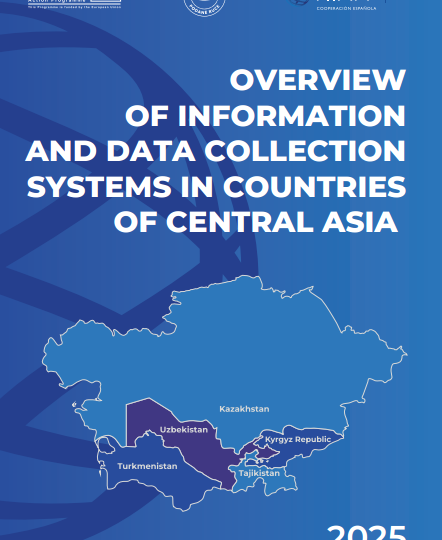
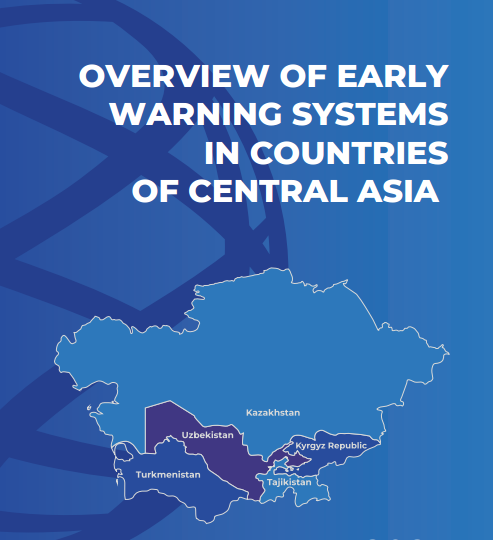
The establishment of Early Warning Systems under CADAP 7 represents one of the most significant
advancements in drug monitoring in Central Asia. EWS are designed to provide an inter-institutional,
multidisciplinary approach to detecting new psychoactive substances and emerging drug-related
phenomena. These systems are built to support public health and law enforcement, their goal being to
provide rapid responses to adverse changes in the drug landscape, aiming to minimize the risks
associated with these changes.
Reports
The methodology employed during our participation in CADAP VII was comprehensive and systematic,
designed to address the specific needs and contexts of each participating country.
The process began by conducting an initial assessment of the existing data collection and analysis
systems in each country. This assessment involved a thorough review of current practices, identifying
strengths and weaknesses, and pinpointing areas that required improvement.
It is of paramount importance to draw attention to the issue of methamphetamine. It is
evident that methamphetamine represents a significant global threat in the field of drug
policy, including for Central Asia. As of June 2024, it is the most prevalent stimulant
worldwide. The use of methamphetamine was detected in a number of countries, includ
ing North America, Southeast Asia, Africa, Australia, Europe and Central Asia. Metham
phetamine use is not a novel phenomenon in Central Asian countries. Methamphetamine
use has been documented in various contexts and among diverse groups in Central Asia
for an extended period
In a concerted effort, drug policies in Central Asia embody a consolidated
commitment to adopt and implement a spectrum of meaningful measures. Rooted in the
principles of international collaboration, these policies are carefully tailored to fit the nuanced
realities unique to each country in the region. This holistic approach, characterised by multi
faceted strategies, demonstrates a forward-looking perspective that transcends immediate
challenges. By promoting synergy among nations and adapting interventions to the constantly
2
evolving dynamics of the drug landscape, the collective effort is poised not only to address
existing problems, but also to anticipate and proactively address future complexities associated
with the persistent drug phenomenon in this geographic expanse.
the Central Asia National Dialogues Systematisation Report aims to provide a comprehensive
and detailed overview of the challenges and concerns raised during the National Dialogues in the five Central
Asian countries. To achieve this, a comprehensive review of the available literature in each country and
various research and analytical activities have been carried out. Specific objectives of the Systematisation
Report include the following:
Assess the current state of drug policy in each Central Asian country.
Identify challenges and opportunities in implementing effective drug policies in the region.
Analyse the different perspectives and approaches presented during the National Dialogues.
To understand the specific drug policy needs of each country.
To offer reflections as preliminary recommendations for improving drug policies in each of the
countries and in the region as a whole.